
Disability Insurance: What Your Group Plan Covers and Where It Stops

Group disability covers a percentage of base salary up to a cap, and ends when the job does. Here is what that leaves uncovered and how individual coverage fills it.
Group disability covers a percentage of base salary up to a cap, and ends when the job does. Here is what that leaves uncovered and how individual coverage fills it.

Parents lose nearly 15 workdays a year driving to school activities. Ten practical ways DMV employers can support parent employees this back-to-school season, most of them free.

A USPS postmark now reflects the date of first automated processing, not the day you dropped the envelope. Here is what that changes for COBRA, ERISA, claims and IRS mailing deadlines.

Reactive service fixes problems. Anticipatory service keeps most of them from arriving. Here is what proactive, year-round insurance advisory actually looks like.
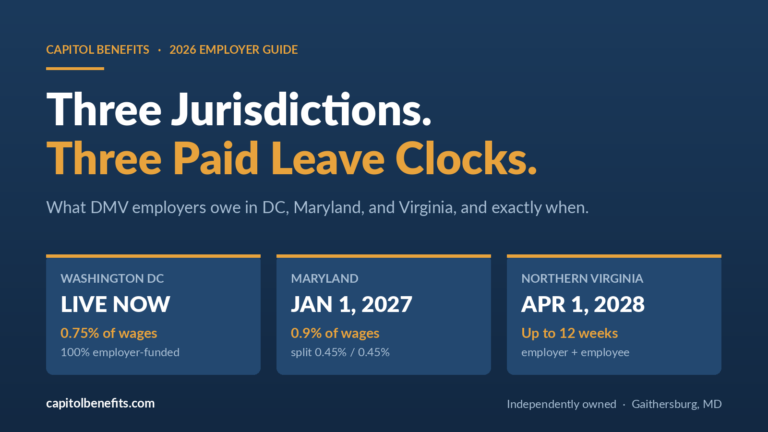
DC, Maryland, and Virginia each run different benefits and paid leave rules on different clocks. Here is what DMV employers with 20 to 250 employees owe in each jurisdiction, and exactly when.

Managing Gen Z requires clear communication, meaningful work, mental health support, and career growth opportunities to foster engagement, break stereotypes, and enhance retention.

By July 31, 2026, employers with self-funded, level-funded, or HRA health plans must file Form 5500 and pay the PCORI fee using 2025 rates. Extensions and accurate filings via EFAST2 are key.

In 2026, DMV group health premiums range $450-$750/employee/month based on size, age, claims, plan design, and funding type. Capitol Benefits advisors help manage costs and optimize plans.

Group health insurance for 20-250 employees in MD, DC, and VA varies by group size, plan type, and contribution splits. Costs range $400-$700/month per employee, with options like fully insured or level-funded plans.

This guide explains small business health insurance options in DC, MD, and VA, covering group plans, funding models (level-funded, self-funded), and alternatives like ICHRA and QSEHRA to help employers choose cost-effective, flexible benefits.