
Winter Is Workers Comp Season: How DMV Employers Can Prevent Cold-Weather Injuries
Key takeaways
- Ice, sleet and snow cause tens of thousands of serious workplace injuries a year. The Bureau of Labor Statistics counted 20,460 such cases in 2017 that kept someone out of work for at least a day.
- Most winter claims come from a handful of causes: falls on icy lots and entrances, ladder and roof work, driving, overexertion from shoveling and cold stress for outdoor crews.
- Maryland and DC require workers compensation for nearly every employer with even one employee. Virginia requires it once a business has more than two employees.
- A slip in your own parking lot is often a covered work injury. The ordinary commute usually is not.
- Prevention, prompt reporting and a return-to-work plan protect your people and help keep future premiums in check.
Winter changes the kinds of injuries that show up on workers compensation claims. A delivery driver slips on a frozen loading dock. A maintenance tech falls from a ladder while clearing a gutter. A receptionist goes down on a wet floor at the front door. Each one is a person hurt, and each one can follow a business into future premiums.
The good news is that winter injuries are some of the most predictable claims there are, which makes them some of the most preventable.
Where winter claims come from
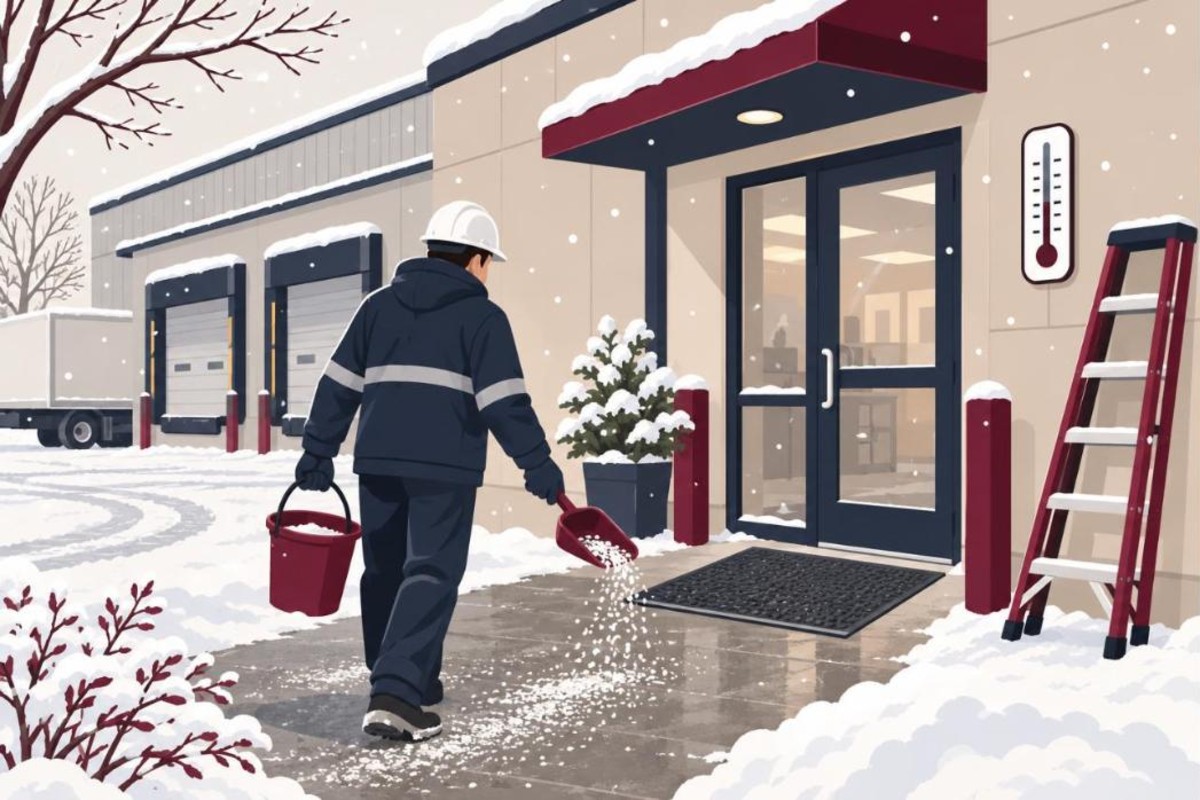
- Slips and falls on icy parking lots, sidewalks, loading docks and wet entryways.
- Ladder and roof work such as clearing gutters, checking roofs after a storm or hanging seasonal decorations.
- Driving in snow, ice and early darkness for employees who are on the road for work.
- Overexertion from shoveling and pushing snow, which strains backs and hearts.
- Cold stress for outdoor crews, including frostbite and hypothermia.
- Space heaters and generators, which bring fire and carbon monoxide risks indoors.
Is it a work injury?
A fall in your own parking lot or at your entrance on the way into a shift is often treated as a work injury. The ordinary commute from home usually is not, although employees who drive for work during the day generally are covered while doing it. Every claim depends on its facts, so report anything that happens and let the carrier sort out coverage.
Who has to carry workers compensation here
- Maryland: required for nearly every employer with one or more employees.
- Washington, DC: required for employers with one or more employees.
- Virginia: required once a business regularly has more than two employees, with some special rules for certain industries.
If you have people working in more than one of these places, make sure each state is listed on your policy.
Prevention that actually works
- Clear and treat lots, walks and entrances before shifts start, and log when it was done.
- Put absorbent mats at every entrance and keep a wet floor sign handy.
- Encourage slip resistant footwear, and consider traction cleats for outdoor crews.
- Build warm-up breaks into outdoor work and use a buddy system in extreme cold.
- Postpone nonurgent ladder and roof work when surfaces are icy.
- Set a clear policy for driving in bad weather, including when it is fine to delay a visit.
- Keep space heaters away from paper and fabric, and never run a generator indoors.
When someone does get hurt
Report the injury to your carrier quickly. Late reporting tends to make claims more expensive and slower for the employee. Keep in touch with the injured worker, and have a return-to-work plan for light or modified duty when the doctor allows it. Employees who come back sooner generally recover better, and shorter claims help protect your experience rating, the factor many carriers use to adjust future premiums.
We work with employers across Maryland, Washington DC and Northern Virginia on coverage and on the practical side of claims. If winter injuries have hurt your numbers in past years, now is a good time to talk about what can change.
Is your workers compensation set up for winter?
We can review your class codes, states and experience rating, and share simple safety steps that fit your team.
Frequently Asked Questions
Is a slip in the company parking lot covered by workers compensation?
Often yes. A fall in a parking lot or entrance you control, on the way into or out of a shift, is commonly treated as a work injury. Each claim depends on its facts, so report it and let the carrier review it.
Does workers compensation cover an employee hurt driving to work in snow?
Usually not for the ordinary commute from home. Employees who drive as part of their job, such as visiting clients or making deliveries, are generally covered while doing that work.
How do winter claims affect my premium?
Claims feed your loss history and, for many businesses, an experience modification factor that adjusts future premiums. Fewer and shorter claims tend to mean better pricing over time.
Do small businesses in Virginia need workers compensation?
Virginia requires coverage once a business regularly has more than two employees, with special rules for some industries. Maryland and DC require it for nearly every employer with one or more employees.
What should an employee do right after a winter injury?
Get medical care if needed, tell a supervisor right away and fill out an incident report. Prompt reporting helps benefits start sooner and makes the claim smoother for everyone.
Related reading from Capitol Benefits
Ready when you are
Let's take a look at what you've got.
A real review of your current coverage. No deck, no pressure, and usually some money saved along the way.