
Auto Insurance in North Potomac, MD
Auto insurance in North Potomac, MD. Your household changes. Your auto policy does not.
Most North Potomac drivers buy auto insurance for one number: the monthly premium. What actually matters is the policy that protects you when a serious accident brings real injuries, real lawsuits, and liability limits you set years ago without thinking. For North Potomac families with higher-value vehicles, teen drivers, and real assets to protect, the right coverage is rarely the cheapest one. As an independent agency representing dozens of carriers, we compare your options, right-size your liability and umbrella protection, and make sure the policy pays when it counts. People over policies, since 2007.
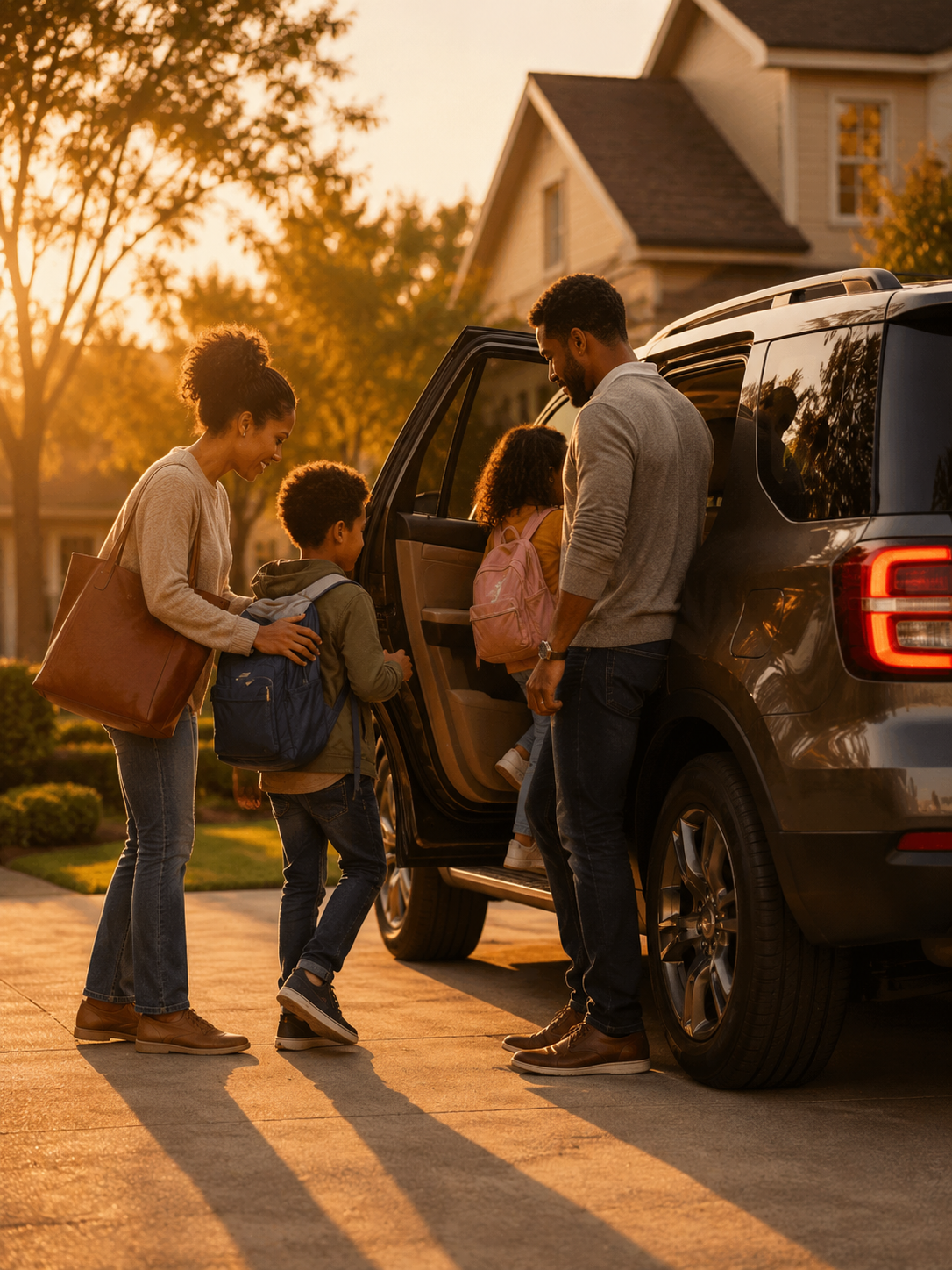
In North Potomac that usually means multi-car family households, a teenager added mid-year, and a new SUV financed for years and driven down I-270. We reassign vehicles the smart way, keep gap coverage on financed cars, right-size liability where a real claim needs it, and add umbrella protection so one accident does not reach your savings.
Or reach us directly
Maryland licensed · Since 2007.
What it covers, plainly
An auto policy is really seven coverages stacked together.
Most people have heard of liability and collision. The other five are where the gaps usually live, and where the difference between a working policy and a failing one tends to show up.
Bodily Injury Liability (BI)
If you cause an accident and someone is injured, this pays their medical bills, lost wages, and any settlement or judgment against you. Maryland's required minimum is $30,000 per person / $60,000 per accident.
That number is not enough. A serious injury claim today routinely runs into the high six figures. We typically recommend $250,000/$500,000 minimum on the auto policy, then layer umbrella coverage on top.
Property Damage Liability (PD)
Pays for damage you cause to someone else's property, usually their car, but also fences, structures, mailboxes, light poles. Maryland's minimum is $15,000, which is roughly the price of one totaled four-year-old sedan. Newer vehicles, trucks, or anything luxury blow through that limit instantly.
Uninsured / Underinsured Motorist (UM/UIM)
If someone hits you and they have no insurance, or not enough insurance to cover your injuries, your UM/UIM coverage pays your own claim against your own policy. This is one of the most important coverages on the policy and one of the most under-purchased.
The Insurance Research Council estimates that more than one in seven drivers nationwide were uninsured in 2023, and an even larger share carry only the state minimum. UM/UIM is the coverage protecting you against them.
Personal Injury Protection (PIP)
PIP pays your own medical bills and lost wages regardless of fault, up to your selected limit. In Maryland, carriers must offer PIP, but you can waive it. A lot of people unknowingly do.
Waiving PIP saves a small premium but eliminates immediate coverage for medical bills after an accident, which can matter a lot if your health insurance has a high deductible.
Collision
Pays to repair or replace your own vehicle after a collision, whether you hit something or someone hits you. Usually subject to a deductible ($500 or $1,000 is most common). Required if you have a loan or lease.
Comprehensive
Everything else that can damage your car: theft, vandalism, fire, hail, falling tree, hitting a deer. Subject to a separate deductible. Almost always carried alongside collision.
Gap, Rental, Roadside (add-ons)
Gap insurance pays the difference if your leased or financed car is totaled and you owe more than it's worth, which happens constantly on new vehicles. Rental reimbursement pays for a rental car while yours is being repaired. Roadside assistance covers towing, lockouts, jump-starts. None are required. All are cheap. Most are worth carrying.
Where most auto policies fall short
Six gaps we see in North Potomac every week.
Whether you got your auto policy through a captive agent, an online quote, or just renewed without anyone reviewing it, one of these probably applies to you. Often more than one.
Gap 01
The crash you are most likely to have here has your own family in it.
Montgomery County's crash records for North Potomac tell a consistent story once you sort them. Across calendar 2021 through 2025 there were 325 reported crashes inside the community, 119 of them causing injury. Ninety of those crashes, 28 percent, involved a single vehicle. Seventy eight happened in the dark. Sixty happened on a wet, snowy or icy surface. This is our own analysis of the county's published records rather than a county statistic, but the pattern is not subtle.
Look at the fatal crashes and it gets sharper. There have been four inside North Potomac since 2015, on Darnestown Road twice, on Great Seneca Highway and on Dufief Mill Road. Every one of them happened after dark. Three of the four involved a single vehicle. These are not intersection collisions with a stranger. They are cars leaving unlit two-lane collector roads at night.
That matters for how you set liability limits, because it changes who gets hurt. In a single-vehicle crash the driver at fault is you, and the injured people are the ones you were driving: your spouse, your children, your kid's teammates on the way back from a game. Your own passengers make bodily injury claims against your policy. Maryland's minimum of $30,000 per person and $60,000 per crash divides very quickly across three or four injured people, and once it is gone the rest is yours.
So the limit is not really about protecting yourself from other drivers here. It is about having enough coverage for a car full of people you know. We start at 250/500 in North Potomac, match uninsured and underinsured motorist coverage to it, and put an umbrella above it, because the household most exposed to this pattern is exactly the one with a full driveway and teenagers in it.
Gap 02
UM/UIM way under-covered.
The Insurance Research Council estimates that more than one in seven drivers nationwide were uninsured in 2023. Many more carry only the state minimum. If one of them hits you and seriously injures you, your UM/UIM is what protects you, and the good news is that Maryland does not quietly set that coverage at the state minimum. Md. Insurance Article § 19-509 requires your uninsured motorist limits to match the liability limits you already bought. The only way they end up lower is if the first named insured signed an affirmative written waiver under § 19-510, and even then the waiver does not count unless the insurer gave written notice of what was being surrendered. So the real question is not whether your uninsured motorist limit is high enough on its own, it is whether your liability limit is, because one follows the other. Worth knowing too: a waiver stays in effect until it is withdrawn in writing, so one signed on an old policy can still be riding along today. We pull that form and read it with you.
Gap 03
Teen drivers added without a real review.
Adding a 16-year-old to a policy without restructuring it is one of the most expensive mistakes parents make. The right carrier, the right vehicle assignment, and the right liability structure can save thousands, and reduce your exposure if the teen causes a serious accident.
Gap 04
Leased or financed cars without gap coverage.
If you total a leased or financed vehicle in year one or two of the loan, you almost always owe more than the car is worth. Gap insurance pays the difference, without it, you're writing a check to the lender for a car you can't drive.
Gap 05
Four cars in the driveway and almost no commute.
North Potomac has an unusual shape to it in the census data. In the 2024 five-year figures, 39.3 percent of workers here work from home, one of the highest rates anywhere we write. And yet 71.4 percent of households keep two or more vehicles, 24.2 percent keep three or more, and only 4.8 percent have no car at all. Among owner-occupied households it is 27.3 percent at three or more. That is a lot of cars doing very little driving.
Almost nobody tells their carrier. Annual mileage is a rating factor, and the mileage on file is usually whatever was estimated when the policy was written, often years and one job change ago. A car genuinely driving 4,000 miles a year is a different risk from the one being rated, and the correction is a phone call rather than a new carrier.
Driver assignment is the other half of it. Carriers assign each driver to a vehicle, and in a four-car household that assignment is frequently wrong or simply stale. A driver who now works from home four days a week may still be rated as the principal operator of the newest car. A student away at school may still be rated at home. Occasional operator classification exists for exactly this and it is routinely unused.
One thing that does not change is comprehensive. A car that sits still is still exposed to hail, falling limbs, theft and the tree work that happens constantly on these lots. Across the Rockville and Gaithersburg postal areas that cover North Potomac addresses, roughly two thirds of vehicle crime reports come from residential parking lots, residential streets and driveways rather than commercial lots. The car you barely drive is the one sitting outside all day.
Gap 06
No umbrella to back it up.
Auto liability limits run out at $250K or $500K, at which point an umbrella policy adds $1M–$5M+ in additional liability coverage across both your home and auto. For a few hundred dollars a year. It's the most under-purchased policy relative to its actual value, and the one most directly tied to auto risk.
Driving in North Potomac
Where the household changes faster than the policy.
North Potomac is family heavy, which means the auto policy here is rarely wrong about the cars. It is wrong about the people, and it usually goes wrong at predictable moments.
Local 01
The permit, then the license, then the bill
Adding a teenage driver is the single largest change most households here will make to an auto premium, and it happens on the state’s timetable rather than yours. There are real levers: which car the new driver is principally assigned to, good student status, driver training credits, and how the household is structured on paper. Almost none of them get applied if the driver is simply added by phone in the week the license arrives. Call before, not after.
Local 02
The student who left for school
A student who goes away to college and leaves the car at home is frequently eligible for a distant student discount, and it is frequently not applied because nobody told the carrier. The reverse also matters: a student who takes a car to another state may be rated in the wrong place entirely. Both situations change again every August and May, and a policy that renews once a year does not track any of it.
Local 03
A young driver raises the liability question, not just the price
The instinct when a premium jumps is to trim coverage. It is the wrong instinct at exactly this moment. A household with a new driver has more exposure than it did a month earlier, not less, and Maryland’s required floor of $30,000 per person was not written with that in mind. If the budget has to move, move the deductible rather than the liability limit.
Local 04
Everyone leaves at the same time
Quince Orchard Road and Darnestown Road carry a very concentrated morning, with school traffic and commuter traffic occupying the same roads in the same twenty minutes. Low speed, high frequency contact is the result. That pattern argues for a collision deductible you would actually be willing to use, because a $2,000 deductible on a $2,400 repair is functionally no coverage at all.
Local 05
The car in the driveway, not the garage
Subdivision garages fill up with everything except cars. A vehicle that lives in the driveway has more comprehensive exposure, from storm damage and falling limbs to theft and catalytic converter loss. It is worth being accurate with your carrier about where each car actually sits overnight, because the answer on the application is often the answer someone gave years ago.
Local 06
Call us in the month before, not the month after
Every expensive surprise on this page has a cheaper version if we hear about it in advance. A permit, a move, a new car, a student leaving. None of those need to be emergencies.
How we work
What an auto insurance advisor should actually do.
01. Your advisor
The same person, year after year.
You get one named advisor who learns your household, which cars, which drivers, which exposures. When you buy a new vehicle or add a teen driver, you call your advisor, not a 1-800 number.
02. Annual review
A full review every year. Proactive.
New car, paid-off car, new driver, moved zip codes, started commuting differently, every annual review asks what's changed and rebuilds the policy around it. We don't wait for the renewal letter.
03. The right carrier
Dozens of carriers. One right fit.
We would rather spend the time up front. Once we understand the household, the vehicles and what a serious claim could reach, shopping dozens of carriers is aimed at a real target instead of a generic profile.
04. Claims advocacy
We show up. Literally.
When something happens, you call us first, not the carrier. We open the claim, coordinate with the adjuster, and stay involved through resolution. For serious accidents, we're the ones pushing for the right interpretation of the policy.
What a real review looks like
Three North Potomac reviews. Three outcomes.
These are three real situations we have handled for three different households. Different problems, different fixes, but the same approach: read the policy closely, find what others missed, and rebuild it around what the family actually needs.
Case 01
The family overpaying by $1,900
Saved $1,900/year · More coverage
A Gaithersburg family had renewed the same captive-carrier policy for nine years straight without anyone reviewing it. We rebuilt the policy with the right carrier, raised their liability limits, and layered an umbrella on top, and still cut their premium by roughly $1,900 a year.
They'd been overpaying for under-protection. That's the kind of gap a real annual review is built to catch.
The result
More coverage for less money. Higher limits, an added umbrella, and roughly $1,900 back in their pocket every year.
Case 02
The teen driver done right
Premium increase cut in half
When a longtime client added their 16-year-old to the policy, the renewal quote nearly doubled. Instead of just accepting it, we restructured the household. We reassigned vehicles, moved to a carrier that prices young drivers fairly, and kept the liability protection where it needed to be.
Adding a teen driver is one of the most expensive mistakes parents make when nobody reviews the policy first. Done right, it doesn't have to be.
The result
A manageable rate, the right coverage in place, the right carriers, and a new driver protected the way they should be.
Case 03
The collector car covered right
Agreed value · Paid in full at claim
A client kept his restored 1968 Mustang on the same standard auto policy as his daily driver, where it was insured at actual cash value. We moved the car to an agreed-value collector policy with the right carrier, set a figure that reflected what the car was actually worth, and bundled it with his home and umbrella coverage.
When the car was later damaged, the claim paid the full agreed value, with no depreciation argument and no fight over what a classic is worth. The right policy is the difference between a check that covers the car and one that doesn't.
The result
A full agreed-value payout at claim time, the car valued for what it really is, and no fight with the carrier when it mattered most.
From a long-time client
"
Our daughter was in an accident two weeks after we added her to the policy. Our advisor called us before the adjuster did.
The Patel Family
Personal Lines · 9 years with Capitol Benefits
Complimentary
Bring us your declarations page. We'll actually read it.
Most auto policies haven't had a real review in years. We'll take yours, look at every line, limits, deductibles, endorsements, named drivers, vehicles, and tell you where you're under-covered, where you're over-paying, and what would actually fit. No pitch. No pressure. Just a real second opinion.
FAQ
Real questions from North Potomac drivers.
Got a different question? Call (301) 431-0000 or send a note. We answer real questions from real people, usually within a few hours.
Ready when you are
Let's take a look at what you've got.
A real review of your current auto coverage. No deck, no pressure, and usually some money saved along the way.